Revisional bariatric surgery is an operation to correct, adjust or convert a previous weight-loss operation, for example turning a sleeve into a gastric bypass. It is part of our guide to bariatric surgery in Egypt.
Reoperations make up about 11% of bariatric operations each year in the United States (ASMBS), and they carry more risk than a first operation. That is why the work-up before a revision matters as much as the surgery itself.
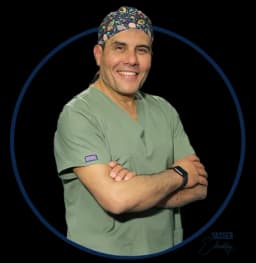
Dr. Yasser Elbasatiny trained in advanced and revisional obesity surgery at Aker University Hospital, Oslo, in 2004, after a diploma in obesity surgery from Padua (2001); he holds the FRCS from Edinburgh (1996). A revision is decided only after examination and tests.
- Tests before revision
- Endoscopy, contrast study, nutrition review
- Anaesthesia
- General
- Hospital stay
- Usually 1–7 nights
- Back to work
- About 4–6 weeks after surgical revision
What is revisional bariatric surgery?
A revision adjusts the original operation, such as making a stretched bypass pouch smaller, while a conversion changes it into a different operation, such as sleeve to bypass. Some problems can be treated endoscopically instead: the connection is tightened or stitched from inside under anaesthesia, usually with a same-day discharge (Cleveland Clinic).
ASMBS recommends a stepwise approach: medical treatment first, then endoscopic options, and reoperation when indicated, with each patient assessed individually (ASMBS).
Why a revision may be needed
After a sleeve gastrectomy
The two main reasons are weight regain or insufficient weight loss, and reflux. In a meta-analysis of sleeve-to-bypass conversions, 52.0% were for poor weight loss or regain and 30.4% for reflux (Obesity Surgery). Another meta-analysis found new reflux in 23% of sleeve patients, and 4% needed conversion to a bypass for severe reflux (Annals of Surgery).
After a gastric band
In a long-term study, band survival was 65.8% at 10 years and 53.3% at 15 years, with removals rising by about 3–4% a year (Obesity Surgery). Common reasons for removal include band migration, poor weight loss and pouch dilation (Surgical Endoscopy).
After a bypass
Revision after a bypass may be needed for complications such as ulcers, reflux, narrowing or pain, for weight regain, or when diabetes or high blood pressure returns (Cleveland Clinic). After a mini bypass, the commonest reasons for conversion are bile reflux and malnutrition (Obesity Surgery).
Who is a candidate, and who should wait
A revision makes sense when the problem has a clear cause that surgery can fix, and when simpler measures have been tried. Cleveland Clinic includes a lifestyle review to see whether non-surgical options, such as medicines or endoscopic treatment, might help first (Cleveland Clinic). Check your BMI with our BMI calculator.
Some things should be corrected before surgery. Protein or vitamin deficiencies are found and treated first (Cleveland Clinic), and smokers are advised to stop, because ulcers at the join are more common after conversion to a bypass than after a first bypass (ASMBS). Pregnancy, severe heart or lung disease and uncontrolled illness may rule surgery out (Cleveland Clinic).
The work-up before revisional bariatric surgery
The surgeon needs to know what the first operation looks like now and why it is not working. The usual work-up includes:
- Upper endoscopy: gives the most useful information about the pouch and its outlet (SOARD).
- Contrast study (barium swallow or upper GI series): shows the oesophagus and intestinal limbs, which endoscopy can miss.
- Nutrition review: dietary assessment and blood tests to find and correct protein or vitamin deficiencies (Cleveland Clinic).
- Further imaging when needed.
In that Cleveland Clinic series, 90% of patients with weight regain had at least one abnormality on endoscopy or contrast study, and 77% were offered a revision based on those findings and the dietary review (SOARD). Bring the operation note from your first surgery if you have it.
Revision options, from sleeve to bypass conversion onwards
The right option depends on the first operation and the problem. The table summarises the common routes.
| First operation | Typical problem | Usual options |
|---|---|---|
| Sleeve gastrectomy | Reflux, weight regain | Conversion to Roux-en-Y bypass (meta-analysis); mini bypass in selected cases (meta-analysis) |
| Gastric band | Migration, pouch dilation, poor weight loss | Band removal and conversion to bypass, in one or two stages (Surgical Endoscopy) |
| Roux-en-Y bypass | Ulcer, stricture, weight regain | Smaller pouch, ulcer repair, rerouting, or endoscopic tightening (Cleveland Clinic) |
| Mini bypass (OAGB) | Bile reflux, malnutrition | Conversion to Roux-en-Y (review) |
See gastric bypass and mini gastric bypass for the target operations. For revisional mini bypass, IFSO says more randomised trials are needed before a firm recommendation (IFSO).
Sleeve to bypass conversion
Conversion of a sleeve to a Roux-en-Y bypass is increasingly common. In a meta-analysis of 556 patients, BMI fell from 38.5 to 32.1 a year after conversion, total weight loss was 22.8%, and the authors noted potential resolution of reflux (Obesity Surgery).
A larger review found diabetes remission in 53% and excess weight loss of 54.6% at 12 months (SOARD).
How the operation is done
Where possible, revisions are done by keyhole surgery under general anaesthetic. They take longer than a first operation because the stomach and intestine have already been altered once (Cleveland Clinic).
- Adhesions from the first operation are freed carefully.
- The existing anatomy is checked against the work-up findings.
- A band, if present, is removed; a pouch may be resized or a sleeve divided.
- New joins are made or old ones refashioned, and gaps are closed.
A band can be removed and converted to a bypass in a single stage, as in 52% of one series, or in two stages (Surgical Endoscopy).
Recovery and diet after revision
After a surgical revision the hospital stay is usually one to seven nights, with light activity in one to two weeks and work after four to six weeks; after an endoscopic revision most people go home the same day (Cleveland Clinic).
The diet moves from clear liquids to full liquids and purées, then soft solids from two to six weeks, and a usual diet after six to eight weeks (Cleveland Clinic). Vitamins and minerals are needed for life, with yearly specialist visits (ASMBS).
Risks compared with a first operation
Revisions have more risks and a higher chance of complications than the original operation (Cleveland Clinic). In a US registry of 141,577 patients, complication rates after revisional sleeve and bypass operations were twice those after first operations, and 30-day readmission after a revisional sleeve was 4.1% against 0.4% (Obesity Surgery).
A later registry analysis confirmed a higher risk of most, but not all, early complications after conversion or revision (Surgical Endoscopy). After sleeve-to-bypass conversion, pooled 30-day complications were 16.4% (Obesity Surgery).
Specific risks include bleeding, infection, a leak at a join, bowel obstruction, nutritional deficiency, dumping and the need for another operation (Cleveland Clinic). In one study ulcers at the join occurred in 14% after sleeve-to-bypass conversion versus 6% after a first bypass (ASMBS).
When to contact your surgeon urgently
Go to the nearest emergency department straight away if you have (NHS):
- severe abdominal pain;
- vomiting blood, or vomit that looks like coffee grounds;
- heavy bleeding from the back passage.
Contact the team the same day for pain or swelling in a leg, a high temperature or shivering, difficulty swallowing, or repeated vomiting. After a revision, report fever or feeling unwell in the first days without delay.
Results to expect
Revision can bring further weight loss and health benefits. After band-to-bypass conversion, average BMI fell from 37.9 before the bypass to 28.8 five years later (Surgical Endoscopy). Cleveland Clinic counts losing 50% or more of excess weight as a common benchmark of success after bypass revision (Cleveland Clinic).
These are published averages, not a forecast. The outcome depends on why the first operation failed, what is done, and on diet, activity and follow-up.
What affects the cost of revisional bariatric surgery
A revision is priced on its complexity: the first operation and its anatomy, the work-up tests (endoscopy, contrast study, blood tests), the expected operating time, the staplers needed, the hospital class and the length of stay.
The price depends on your case and is given on request, so ask for a current written quote after the work-up. You can book a consultation with Dr. Yasser in New Cairo or at Cleopatra Hospitals, and ask the clinic about payment options.
Frequently asked questions
Is revisional bariatric surgery riskier than the first operation?
Can a sleeve gastrectomy be converted to a gastric bypass?
What tests are needed before revision surgery?
What happens if my gastric band has failed?
Can weight regain be treated without another operation?

Medically reviewed by Dr. Yasser Elbasatiny
Last updated:
Sources
- Primary and revisional OAGB: systematic review and GRADE-based IFSO position statement, Obesity Surgery 2026
- OAGB conversion to Roux-en-Y gastric bypass: systematic review and meta-analysis, Obesity Surgery 2024
- ASMBS literature review on risk factors, screening and prophylaxis for marginal ulcers, SOARD 2024
- NHS: Weight loss surgery – complications
- Cleveland Clinic: Gastric bypass surgery
- Cleveland Clinic: Gastric bypass revision
- ASMBS: Life after bariatric surgery
- Does sleeve gastrectomy expose the distal oesophagus to severe reflux? Systematic review and meta-analysis, Annals of Surgery 2020
- 30-day outcomes of revisional bariatric stapling procedures: MBSAQIP registry, Obesity Surgery 2018
- Early complications in primary and revisional sleeve, bypass and duodenal switch: MBSAQIP 2015–2019, Surgical Endoscopy 2023
- Indications and outcomes of conversion of sleeve gastrectomy to RYGB: systematic review and meta-analysis, Obesity Surgery 2021
- Sleeve gastrectomy conversion to RYGB: weight loss, diabetes remission and complications, SOARD 2023
- Long-term outcomes of laparoscopic adjustable gastric banding: weight loss and removal rate, Obesity Surgery 2017
- Long-term follow-up of revisional gastric bypass after failed adjustable gastric banding, Surgical Endoscopy 2013
- Endoscopy and upper GI contrast studies are complementary in evaluating weight regain after bariatric surgery, SOARD 2006
- ASMBS literature review on reoperative metabolic and bariatric surgery for chronic complications
- Revisional OAGB after restrictive surgery: meta-analysis and comparison with revisional RYGB, Obesity Surgery 2021