Surgical oncology in Cairo, as anywhere, is the part of cancer care in which a surgeon removes a tumour, checks the lymph nodes around it and, when cure is not possible, relieves symptoms. It is written here for patients and families who have just heard the word cancer, or a suspicious result, and want to understand what comes next.
The operation is only one part of the plan. Treatment is agreed by a multidisciplinary team of surgeon, oncologist, radiologist and pathologist, and the surgeon's part is decided after staging. This guide explains that process and summarises surgery for colon, stomach, breast and thyroid tumours, each with its own detailed page.
How surgical oncology works in Cairo: the surgeon within the cancer team
Cancer surgery can remove a tumour that is contained in one area, remove part of a tumour when taking all of it would harm an organ, or ease pain and pressure (NCI). The surgeon usually removes some healthy tissue around the cancer and nearby lymph nodes, which the pathologist then examines under the microscope.
Those decisions are not made by one doctor alone. A multidisciplinary team (MDT) brings together the surgeon, oncologist, radiologist, pathologist, specialist nurse and, for bowel cancer, the endoscopist, to review each patient and give a clear recommendation (BJS Open). The oncologist plans chemotherapy, radiotherapy or hormone treatment; the radiologist reads the scans; the pathologist confirms the diagnosis and, after surgery, the final stage.
For you this means one agreed plan rather than separate opinions. It may start with surgery, or with chemotherapy first and surgery later, depending on the cancer and its stage.
Staging: the tests before cancer surgery
Staging describes how large the tumour is and whether it has spread, and it helps doctors plan the right treatment (NCI). Most cancers are described with the TNM system: T for the size and extent of the main tumour, N for the nearby lymph nodes that contain cancer, and M for spread to distant parts of the body. Stages run from 0 to IV.
The tests depend on the organ: endoscopy or colonoscopy with biopsy, CT, MRI or PET scans, ultrasound and blood tests. Before the operation itself you may also need fitness checks such as blood tests, a chest X-ray or an ECG (NCI).
Staging is repeated in a sense after surgery, when the pathology report confirms what was removed. That report often decides whether further treatment is needed, which is why the surgeon's job includes careful lymph node removal.
The days between tests and a decision can feel long, but they are worth it: a plan built on accurate staging spares you an operation you do not need, or treatment that falls short. Ask what each test is for and how its result could change the treatment plan.
Laparoscopic or open cancer surgery
In minimally invasive surgery, the surgeon works through a few small cuts with a camera, and recovery takes less time than after open surgery (NCI). The question for cancer is whether it removes the disease as well, and for suitable colon and stomach cancers large trials say it does.
| Laparoscopic (keyhole) | Open | |
|---|---|---|
| Cuts | Several small cuts | One larger cut |
| Colon cancer: hospital stay (COST trial) | Median 5 days | Median 6 days |
| Colon cancer: recurrence and survival | Similar with both approaches | |
| Stage I stomach cancer: long-term survival (KLASS-01) | Keyhole distal gastrectomy as safe as open | |
| Pain medicine (COST trial) | Less | More |
| Conversion | May switch to open if safer | Not applicable |
Sources: NEJM 2004, JAMA Oncology 2019, Cancer Research UK. Breast and thyroid operations are done through a skin incision rather than inside the abdomen, so the keyhole question mainly applies to bowel and stomach tumours.
Colon cancer surgery
For colon cancer, the surgeon removes the affected segment of bowel with its blood supply and at least 12 lymph nodes, then joins the healthy ends (ACS). The operation is named after the part removed, such as a right or left hemicolectomy or a sigmoid colectomy. Most patients do not need a stoma; when one is made, it is usually temporary and often reversed about 2 to 6 months later.
Keyhole colectomy suits many patients and gives cancer results similar to open surgery, with a shorter stay in the COST trial. Recovery follows an enhanced recovery pathway: eating and walking early, usually going home within 3 to 7 days (NHS Worcestershire). If the lymph nodes contain cancer, chemotherapy usually follows. Read the full guide to laparoscopic colon cancer surgery.
Stomach cancer surgery
Stomach cancer is treated with a partial gastrectomy when it sits in the lower stomach, or a total gastrectomy when it is higher up, together with the lymph nodes around the stomach (Cancer Research UK). In a D2 lymphadenectomy, the nodes along the larger vessels are also cleared, an approach associated with very good results in Japan and South Korea (ACS).
Most patients have chemotherapy both before and after the operation unless the cancer is very early (Cancer Research UK). Eating changes afterwards, with smaller, more frequent meals and vitamin B12 injections. The page also covers GIST, a different tumour of the stomach wall. Read the full guide to stomach cancer surgery.
Breast cancer surgery
Breast cancer surgery either keeps the breast (lumpectomy, followed in most women by radiotherapy) or removes it (mastectomy), and checks the armpit nodes, usually with a sentinel node biopsy. For early-stage cancer, lumpectomy with radiotherapy gives the same long-term survival as mastectomy (ACS).
Sentinel node biopsy removes only the first few nodes and carries a lower risk of arm swelling than a full axillary dissection (ACS). Reconstruction can sometimes be done at the same time. Benign lumps such as fibroadenomas are common and often need no operation. Read the full guide to breast cancer surgery.
Thyroid surgery for nodules, goitre and cancer
By age 60 about half of all people have a thyroid nodule, and over 90% are benign (ATA). Ultrasound and a fine-needle biopsy decide who needs an operation. Surgery removes one lobe (lobectomy) or the whole gland (total thyroidectomy), for suspicious nodules, cancer, a goitre that presses on the windpipe or an overactive thyroid.
The main risks are temporary hoarseness and, after total thyroidectomy, low calcium, both usually short-lived (ATA). After removing the whole gland, a daily thyroxine tablet is needed for life. Read the full guide to thyroid surgery.
Second opinions and sending your reports first
Getting a second opinion is very common, and most doctors welcome it; it can help you feel more confident that you have explored your options (NCI). Pathology slides can also be reviewed by a consulting pathologist, and labs can release the slides or send them on (ACS). Always keep an original copy of your reports.
You can send your reports to Dr. Yasser before visiting, so the consultation starts from the full picture. Useful items are:
- The biopsy or pathology report, and any operation notes
- CT, MRI, PET or ultrasound reports, with the images on a disc or link
- Endoscopy or colonoscopy reports
- Recent blood tests, such as CEA or thyroid tests, and a list of your medicines
A review of reports helps plan the visit, but it is not a diagnosis; any surgical decision follows examination and, where needed, further tests. To send them, book a consultation with Dr. Yasser.
Why patients see Dr. Yasser for surgical oncology in Cairo
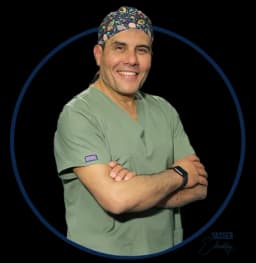
Dr. Yasser Elbasatiny is a consultant surgeon with more than 30 years in surgical practice since qualifying from Ain Shams University in 1989. He holds the FRCS in General Surgery from the Royal College of Surgeons of Edinburgh (1996), became a Fellow of the International College of Surgeons (FICS) in 1997, and earned his MSc and MD in Surgery at Ain Shams University.
His training in minimally invasive surgery includes a diploma in advanced laparoscopic surgery from the European Surgical Institute in Hamburg and a course in obesity and colon surgery at the same institute in Hamburg-Norderstedt in 2009. He sees patients in New Cairo (Fifth Settlement) and at Cleopatra Hospitals.
His part in your care is the operation, planned with the oncologist, radiologist and pathologist responsible for you, after staging and examination.
Related pages
- Colon cancer surgeryDetailsKeyhole colectomy for colon cancer: types, lymph nodes, stoma and enhanced recovery.
- Stomach cancer surgeryDetailsPartial and total gastrectomy, D2 lymph nodes, perioperative chemotherapy and GIST.
- Breast cancer surgeryDetailsLumpectomy or mastectomy, sentinel node biopsy, recovery, and benign lumps such as fibroadenoma.
- Thyroid surgeryDetailsLobectomy or total thyroidectomy for nodules, goitre and cancer, with voice and calcium risks explained.
Frequently asked questions
What does a surgical oncologist do?
Is surgery always the first treatment for cancer?
Is keyhole surgery safe for cancer?
Should I get a second opinion before cancer surgery?
What reports should I bring to my first oncology surgery consultation?
Medically reviewed by Dr. Yasser Elbasatiny
Last updated:
Sources
- American Cancer Society – Colon cancer surgery
- Cancer Research UK – Colectomy
- Worcestershire Acute Hospitals NHS Trust – Colorectal enhanced recovery programme
- COST Study Group – Laparoscopically assisted vs open colectomy for colon cancer (NEJM 2004)
- KLASS-01 – Laparoscopic vs open distal gastrectomy for stage I gastric cancer (JAMA Oncol 2019)
- American Cancer Society – Surgery for stomach cancer
- Cancer Research UK – Types of surgery for stomach cancer
- Cancer Research UK – Chemotherapy for stomach cancer
- American Cancer Society – Breast-conserving surgery (lumpectomy)
- American Cancer Society – Lymph node surgery for breast cancer
- American Thyroid Association – Thyroid surgery
- American Thyroid Association – Thyroid nodules
- NCI – Surgery to treat cancer
- NCI – Cancer staging
- NCI – Finding cancer care and getting a second opinion
- American Cancer Society – Second opinions on biopsy and cytology results
- BJS Open – Systematic review of colorectal multidisciplinary team meetings (2021)