Bariatric surgery in Egypt covers a family of operations, from the gastric sleeve to the mini and classic gastric bypass, along with the non-surgical gastric balloon. This guide is for adults living with obesity, in Egypt, the Gulf or further away, who want to understand their options before they sit down with a surgeon.
Each section gives a short, sourced summary and links to a full page on that operation. The right procedure for you is chosen after an examination and tests, never from a website alone.
Gastric sleeve: the most common first operation
In a sleeve gastrectomy, about 80% of the stomach is removed with surgical staples, leaving a narrow tube roughly the size and shape of a banana (ASMBS). The smaller stomach holds less food and makes less of the hormone that drives hunger (Cleveland Clinic). It is done by keyhole surgery under general anaesthetic and usually takes 1 to 3 hours (NHS).
On average, people lose around 25% to 30% of their body weight in the first one to two years, and that average holds at five years (Cleveland Clinic). The sleeve cannot be reversed, because part of the stomach is taken away, and it can worsen reflux or cause new heartburn (NIDDK). Anyone with troublesome reflux therefore needs a careful assessment before choosing it. Read the full guide to Gastric sleeve surgery.
What a gastric sleeve costs in Egypt
We do not publish a fixed figure, because an honest price depends on the hospital, the nights you stay, the tests you need and the follow-up that is included. Two quotes for the same operation in Cairo can look very different simply because one includes the staplers, the hospital stay and the dietitian visits while the other lists them separately. Comparing like with like is the first step to a fair surgical quote.
Before surgery the team checks your health with blood and urine tests, X-rays and scans (NHS). Afterwards you need vitamin and mineral supplements and regular check-ups for life (NHS). These are real costs, so ask for them in writing. Our page on Gastric sleeve cost explains what drives the price and how to ask Dr. Yasser’s team for a current written quote.
Mini gastric bypass (one-anastomosis bypass)
The one-anastomosis gastric bypass makes the stomach into a long, narrow tube and joins it in a loop to the middle of the small intestine, using one connection where a classic bypass uses two (Cleveland Clinic). It is usually done laparoscopically, takes about two hours and needs one to two days in hospital (Cleveland Clinic).
One study found up to 73% excess weight loss at five years, compared with 60% for a traditional bypass (Cleveland Clinic). The trade-offs include a higher risk of bile reflux, ulcers where the stomach meets the bowel, and a lifelong need for vitamins (Cleveland Clinic). Whether it suits you depends on your reflux history, your eating pattern and how reliably you can attend follow-up. Read more about the Mini gastric bypass.
Classic Roux-en-Y gastric bypass
In a Roux-en-Y gastric bypass, the stomach is divided with staples into a small upper pouch about the size of an egg, and the small intestine is rerouted so food skips most of the stomach and the first part of the bowel (ASMBS, NIDDK). Most patients lose between 66% and 80% of their excess weight, mostly within 18 to 24 months (Cleveland Clinic).
The bypass often improves reflux quickly, which matters if you already live with heartburn (ASMBS). On the other hand, it is technically more complex, carries more risk of vitamin and mineral shortages than a sleeve, and can lead to ulcers, bowel obstruction and dumping syndrome (ASMBS). The full guide to Gastric bypass surgery explains who it suits and what life after it involves.
Revisional bariatric surgery after a previous operation
Revisional surgery is a second operation for someone who has already had a weight-loss procedure, because of weight regain, reflux, a complication or a band that no longer works. The ASMBS notes that a sleeve can be a first step, or a bridge to a later bypass, in some patients (ASMBS). A gastric band that slips can cause heartburn, nausea and vomiting, and may need further surgery to reposition or remove it (NHS).
Revision is usually more demanding than a first operation, because the surgeon works with scar tissue and changed anatomy. It starts with a full review: the notes from your first operation, imaging or an endoscopy, and an honest look at eating habits since then. Dr. Yasser trained in advanced and revisional obesity surgery at Aker University Hospital, Oslo, in 2004. Read the guide to Revisional bariatric surgery.
Gastric balloon: a non-surgical option
An intragastric balloon is a soft balloon filled with salt water that takes up space in the stomach, so you feel full on less food; it does not permanently change the stomach or intestine (NIDDK). The most common type is placed through an endoscope under mild sedation in 20 to 30 minutes and stays for six months (Cleveland Clinic). Another type is swallowed empty and filled through a thin tube once it is in the stomach, which usually takes around 20 minutes (NHS).
Average weight loss is about 10% of total body weight, most of it in the first three months, and only a minority keep it off over five years (Cleveland Clinic). It is intended for adults with a BMI of about 30 to 40 (Cleveland Clinic), and some people use it as a bridge to surgery (Cleveland Clinic). Read the full guide to the Gastric balloon.
Who qualifies for bariatric surgery in Egypt?
Surgeons start with the body mass index (BMI): your weight in kilograms divided by the square of your height in metres. The NHS offers surgery from a BMI of 40, or from 35 to 40 with a condition that could improve with weight loss, such as high blood pressure or diabetes (NHS). The 2022 international guidelines from the ASMBS and IFSO go further: surgery is recommended from a BMI of 35 whatever your other conditions, and should be considered from 30 to 34.9 in people with metabolic disease (ASMBS/IFSO).
Thresholds are lower for some groups. The NHS says surgery may be considered below a BMI of 40 for people of South Asian, Chinese, Middle Eastern, African or Caribbean background (NHS). The international guidelines suggest offering it to Asian patients from a BMI of 27.5, and set no upper age limit, though frailty is assessed carefully (ASMBS/IFSO).
BMI is only the first filter. You also need to commit to lifelong changes in eating and activity, to supplements and to follow-up care (NIDDK). Work out your number with our BMI calculator, then send it to the clinic with your questions.
How to choose between types of bariatric surgery in Egypt
There is no single right operation. The choice of procedure depends on your BMI, reflux, diabetes, eating pattern, any previous surgery and how easily you can attend follow-up. The table sums up what the sources say; your surgeon weighs it against your own tests.
| Gastric sleeve | Mini gastric bypass | Roux-en-Y gastric bypass | Gastric balloon | |
|---|---|---|---|---|
| What is done | About 80% of the stomach is removed (ASMBS) | A narrow stomach tube is joined in one loop to the small intestine (Cleveland Clinic) | An egg-sized pouch is made and the intestine rerouted (ASMBS) | A saline balloon is placed in the stomach, no surgery (NIDDK) |
| Typical weight loss | 25–30% of body weight in the first 1–2 years (Cleveland Clinic) | Up to 73% of excess weight at five years in one study (Cleveland Clinic) | 66–80% of excess weight, mostly by 18–24 months (Cleveland Clinic) | About 10% of total body weight (Cleveland Clinic) |
| Reflux | May worsen reflux or cause new heartburn (ASMBS) | Higher risk of bile reflux (Cleveland Clinic) | Reflux often improves quickly (ASMBS) | Acid reflux and indigestion are common early side effects (Cleveland Clinic) |
| Reversible? | No, part of the stomach is removed (NIDDK) | Any change means a further operation | Difficult; reversal is a major operation (Cleveland Clinic) | Temporary by design; the common type is removed after six months (Cleveland Clinic) |
| Typical candidate | BMI 40+, or 35+ with a related disease (Cleveland Clinic), without troublesome reflux | Class III obesity and related conditions (Cleveland Clinic) | Severe obesity with reflux or obesity-related disease (ASMBS) | BMI 30–40, or as a bridge to surgery (Cleveland Clinic) |
Two rows matter more than the weight-loss figures. A sleeve cannot be undone, and every operation commits you to supplements and check-ups for life (NHS). The percentages are averages from large centres, not a promise, and they use different measures (total body weight versus excess weight), so compare them with care.
Why patients see Dr. Yasser Elbasatiny
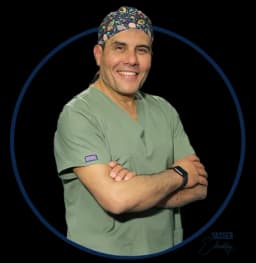
Dr. Yasser Elbasatiny is a consultant in bariatric, laparoscopic and general surgery with more than 30 years in practice since qualifying from Ain Shams University in 1989. He holds an MSc and an MD in surgery from Ain Shams, became a Fellow of the Royal College of Surgeons of Edinburgh (FRCS) in 1996 and a Fellow of the International College of Surgeons in 1997.
His training in weight-loss surgery includes a diploma in obesity surgery from the University of Padua in 2001, training in advanced and revisional obesity surgery at Aker University Hospital, Oslo, in 2004, and a diploma in advanced laparoscopic surgery from the European Surgical Institute in Hamburg. He sees patients in New Cairo (Aspects Clinica, 164 North Teseen St., Fifth Settlement) and at Cleopatra Hospitals.
Every decision about surgery is made after an examination and the necessary tests, and some patients are told that surgery is not the right step yet. If you would like a personal assessment, book a consultation with Dr. Yasser.
Related pages
- Gastric sleeveDetailsKeyhole removal of about 80% of the stomach to reduce hunger and portion size.
- Gastric sleeve costDetailsWhat drives the price of a sleeve, and how to get a current written quote.
- Mini gastric bypassDetailsOne-anastomosis gastric bypass (OAGB/MGB): how it works, who it suits and the risks specific to it.
- Gastric bypassDetailsRoux-en-Y gastric bypass: how it works, who it suits, its risks and life after surgery.
- Revisional bariatric surgeryDetailsRevision or conversion after a sleeve, band or bypass: reasons, tests, options and risks.
- Gastric balloonDetailsA temporary, non-surgical balloon that helps you eat less for several months.
Frequently asked questions
What is the minimum BMI for bariatric surgery?
Which is better, gastric sleeve or gastric bypass?
How safe is weight-loss surgery?
How long does recovery take after bariatric surgery?
Can I get pregnant after weight-loss surgery?
Medically reviewed by Dr. Yasser Elbasatiny
Last updated:
Sources
- ASMBS – Bariatric surgery procedures
- Cleveland Clinic – Mini gastric bypass (one anastomosis)
- NIDDK (NIH) – Types of weight-loss surgery
- Cleveland Clinic – Gastric sleeve surgery
- Cleveland Clinic Bariatric & Metabolic Institute – Gastric bypass
- Cleveland Clinic – Intragastric balloon
- Cleveland Clinic Bariatric & Metabolic Institute – Intragastric balloon
- NHS – Weight loss surgery: how it is done
- NHS – Weight loss surgery: preparing
- NHS – Weight loss surgery: recovering
- NHS – Weight loss surgery: complications
- NHS – Weight loss surgery: why it is done
- Eisenberg et al. 2022 ASMBS and IFSO Indications for Metabolic and Bariatric Surgery (Obes Surg 2023)
- NIDDK (NIH) – Potential candidates for bariatric surgery