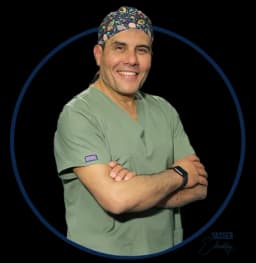
Laparoscopic surgery in Cairo lets many common abdominal operations be done through a few small cuts instead of one long incision. This guide is for adults weighing keyhole surgery for gallstones, a hernia, reflux from a hiatal hernia or appendicitis, and for anyone with an anal fistula, which is treated with general surgery rather than a laparoscope.
Each section below summarises one operation and links to its full page, with recovery times and warning signs taken from published sources. Whatever you read here, an operation is only recommended after an examination and tests.
What laparoscopic (keyhole) surgery is
Laparoscopy is a type of keyhole surgery used to diagnose and treat conditions inside the tummy and pelvis (NHS). It is done under general anaesthetic, so you are asleep and feel no pain. The surgeon makes one small cut, usually near the belly button, and adds a few more small cuts for the instruments when needed.
Gas is pumped into the abdomen to create working space, and a thin tube carrying a camera, the laparoscope, sends a magnified picture to a screen. The surgeon operates while watching that screen. At the end the gas is let out and the cuts are closed with stitches or clips.
The main reason surgeons prefer this route is a faster recovery: the NHS notes that most people leave hospital the same day or the day after (NHS). Common after-effects in the first days include bloating, cramps, tiredness, a sore throat and shoulder-tip pain from the gas.
Laparoscopic surgery vs open surgery: the differences Cairo patients ask about
Open surgery reaches the organ through one larger cut, while keyhole surgery reaches it through several small ones. The table uses gallbladder removal as the example, because the US National Institute of Diabetes and Digestive and Kidney Diseases publishes clear figures for both routes.
| Laparoscopic (keyhole) | Open surgery | |
|---|---|---|
| Cuts | A few small cuts, one usually near the belly button (NHS) | A single larger cut in the tummy (NHS) |
| Hospital stay after gallbladder removal | Often home the same day (NIDDK) | Up to a week (NIDDK) |
| Back to normal physical activity | About a week (NIDDK) | About a month (NIDDK) |
| When it is used | The usual approach for most patients | Severely inflamed, infected or scarred gallbladder (NIDDK) |
These are typical figures, not promises. The NHS advises that full recovery after laparoscopic surgery can take 6 to 8 weeks (NHS), even when you are back to light activity much sooner, and your own timeline depends on the operation and your general health.
Laparoscopic gallbladder removal (cholecystectomy)
Gallstones are common and often cause no symptoms, but a stone blocking a bile duct can cause severe, constant pain lasting more than 30 minutes and up to several hours (NHS). The main treatment for troublesome stones is removing the gallbladder, and you can live without it and keep eating a normal, healthy diet (NHS).
The keyhole operation usually takes about an hour under general anaesthetic (NHS), many people go home the same day, and most can return to work after 1 to 2 weeks (NHS). When a stone has slipped into the common bile duct, an endoscopic procedure called ERCP may be used to remove it (NIDDK).
Read the full guide to laparoscopic gallbladder removal, including bile duct stones and the warning signs after surgery.
Laparoscopic hernia repair: groin, belly button and scar hernias
A hernia is a bulge where tissue pushes through a weak spot in the muscle wall: in the groin (an inguinal hernia), at the belly button (umbilical) or through an old scar (incisional). International guidelines advise surgery for groin hernias that cause symptoms, while men with few or no symptoms may be offered watchful waiting (HerniaSurge).
Mesh repair is the recommended first choice, by an open or a laparo-endoscopic technique such as TAPP or TEP, and where expertise is available the keyhole route gives faster recovery and a lower risk of chronic pain (HerniaSurge). Inguinal repair takes 30 to 90 minutes, most people go home the same day, and they need at least 1 to 2 weeks off work (NHS).
See the full page on laparoscopic hernia repair for TAPP and TEP, mesh, recovery and the emergency signs of a trapped hernia.
Hiatal hernia surgery and fundoplication for reflux
In a hiatal hernia, part of the stomach moves up into the chest through the diaphragm. Many people have one without knowing, and most symptoms are managed with lifestyle changes and medicines, from antacids to stronger prescribed tablets; referral for surgery usually comes only when other treatments fail and very bad symptoms continue (NHS).
The operation is usually keyhole. The surgeon repairs the hernia and wraps the top of the stomach around the lower food pipe, a fundoplication, which in most cases gives long-term improvement of reflux symptoms (NIDDK). It normally takes 1 to 1½ hours and you usually stay 1 to 3 days (Guy's and St Thomas'), then eat soft or blended food for up to 4 to 6 weeks (Guy's and St Thomas').
Read more about hiatal hernia surgery and when medicines are enough.
Laparoscopic appendectomy for appendicitis
Appendicitis usually starts as pain around the belly button that moves to the lower right side of the tummy within a few hours and gets worse (NHS). It is an emergency: if you suspect it, go to the nearest emergency department rather than waiting for a clinic appointment, and do not drive yourself.
Removing the appendix is the usual treatment and is done as soon as possible. The operation takes about an hour under general anaesthetic, usually by keyhole; after keyhole surgery you may go home the next day, and most people recover in 1 to 2 weeks (NHS). Antibiotics alone suit some people, but in a large US trial 29% of the antibiotic group had their appendix removed within 90 days (CODA, NEJM).
The full page on laparoscopic appendectomy lists the warning signs before and after surgery.
Anal fistula surgery (general surgery, not keyhole)
An anal fistula is a small tunnel between the end of the bowel and the skin near the anus, usually left after an abscess that did not heal properly (NHS). Fistulas rarely heal without treatment, so most need surgery. This is general surgery done through the anus, not laparoscopy, but it sits here with the other common operations Dr. Yasser performs.
Options include a fistulotomy, which opens the tunnel so it heals as a flat scar, a seton thread left in for several weeks, an advancement flap, or the LIFT procedure (NHS). The choice depends on how much of the sphincter muscle the tunnel crosses, because protecting bowel control matters as much as healing. Many people do not need to stay overnight.
Read the full guide to anal fistula surgery.
When keyhole surgery is not suitable, and conversion to open surgery
Keyhole surgery is the usual route for these operations, but not for every patient. An open operation may be planned from the start when the organ is severely inflamed, infected or scarred from earlier surgery, as the NIDDK describes for gallbladder removal (NIDDK). Some complex hernias are also repaired through an open cut.
Sometimes the plan changes during the operation. If the view is poor, bleeding is hard to control or the anatomy is unclear, the surgeon may switch to open surgery with a larger cut, which the NHS lists among the possible complications of laparoscopy (NHS). This is a safety decision, not a failure, and it is part of the consent you give beforehand.
Other rare complications of laparoscopy include damage to an organ such as the bladder, damage to a blood vessel, a hernia at one of the cuts and blood clots in the legs or lungs (NHS). Your fitness for a general anaesthetic, heart and lung health and previous abdominal operations are all checked before the route is decided.
Why patients in Cairo choose Dr. Yasser for laparoscopic surgery
Dr. Yasser Elbasatiny has more than 30 years in surgical practice since qualifying from Ain Shams University in 1989, where he also completed his MSc in general surgery and his MD in surgery. He became a Fellow of the Royal College of Surgeons of Edinburgh (FRCS) in 1996.
His keyhole training includes a diploma in advanced laparoscopic surgery from the European Surgical Institute in Hamburg. In 1999 he completed courses in laparoscopic cholecystectomy at King Fahd University Hospital in Al Khobar and in advanced laparoscopy at the Aramco Dhahran Health Centre.
He sees patients in New Cairo (Fifth Settlement) and at Cleopatra Hospitals. Every recommendation follows an examination and the right tests, and he will say plainly when medicines, watchful waiting or another approach suits you better than an operation. You can book a consultation with Dr. Yasser to go through your scans and options.
Related pages
- Gallbladder removalDetailsKeyhole removal of the gallbladder for painful gallstones, usually as a day case.
- Hernia repairDetailsKeyhole mesh repair of groin, belly-button and scar hernias, usually as a day case.
- Hiatal hernia surgeryDetailsKeyhole repair of a hiatal hernia with a stomach wrap for reflux that medicines do not control.
- AppendectomyDetailsKeyhole removal of an inflamed appendix, usually as an emergency operation.
- Anal fistula surgeryDetailsSurgery for anal fistula: fistulotomy, seton, LIFT or flap, planned to protect bowel control.
Frequently asked questions
Is laparoscopic surgery safer than open surgery?
How long does recovery take after laparoscopic surgery?
Will I have scars after keyhole surgery?
Can every operation be done by laparoscopy?
Is laparoscopic surgery done under general anaesthetic?

Medically reviewed by Dr. Yasser Elbasatiny
Last updated:
Sources
- NHS – Laparoscopy (keyhole surgery)
- NIDDK – Treatment for gallstones
- NHS – Gallstones
- NHS – What is gallbladder removal?
- NHS – How gallbladder removal is done
- NHS – Recovering from gallbladder removal
- HerniaSurge Group. International guidelines for groin hernia management. Hernia 2018 (PubMed)
- NHS – Inguinal hernia repair
- NHS – Hiatus hernia
- NIDDK – Treatment for GER and GERD
- Guy's and St Thomas' NHS – Fundoplication: having surgery
- Guy's and St Thomas' NHS – Recovery and diet after fundoplication
- NHS – Appendicitis
- CODA Collaborative. A randomized trial comparing antibiotics with appendectomy for appendicitis. N Engl J Med 2020 (PubMed)
- NHS – Anal fistula
- NHS – Anal fistula: treatment